

I Tried 7 Different Cholesterol Supplements. Only One Actually Worked.
Let me save you the money and the false hope.
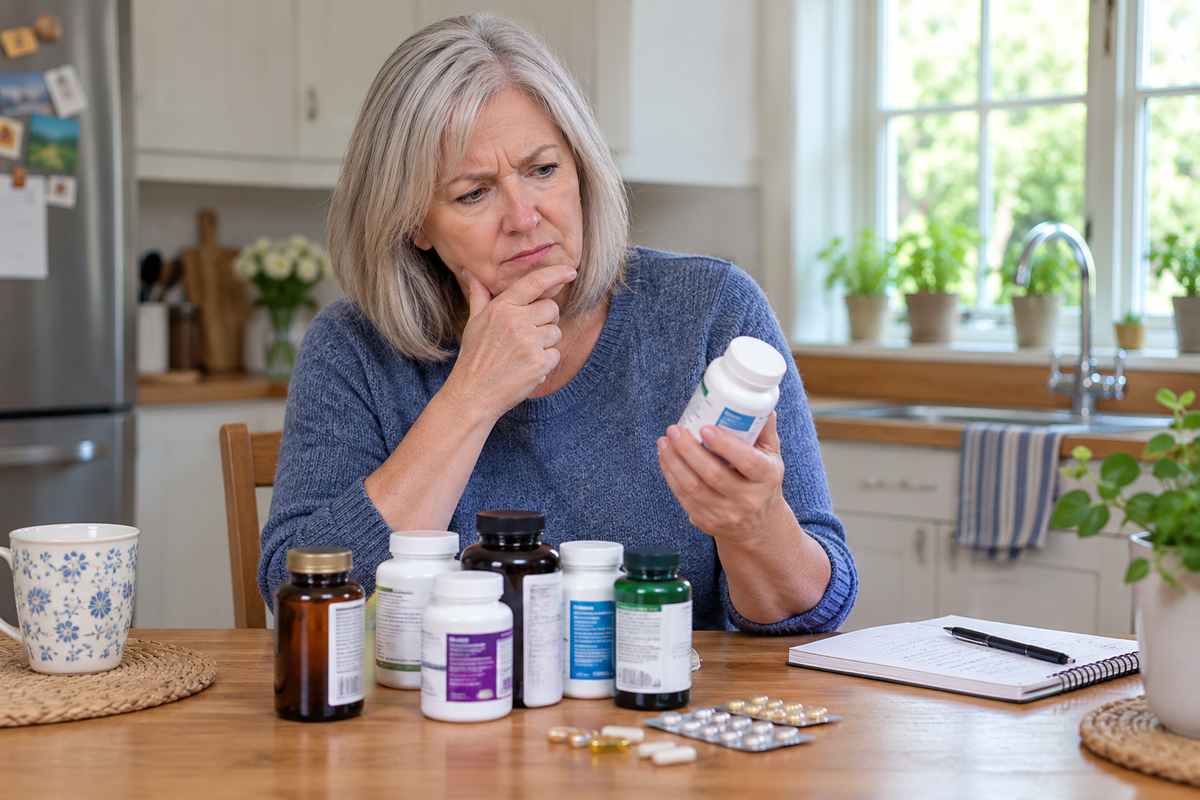
Over the past six months, I tried the garlic capsules from Holland & Barrett, the plant sterol drinks my GP kept recommending, the omega-3 fish oils my sister swears by, a "high-strength" nattokinase from the high street that turned out to be barely 2,000 FU, a red yeast rice capsule I found on Amazon, the atorvastatin my GP finally talked me into, and then, almost by accident, something I'd never seen on a single shop shelf in this country.
Six disappointments. One that actually shifted my numbers. Here's the difference, and what I wish someone had told me before I spent over £200 on supplements that did nothing.
The £8 Garlic Capsules From Holland & Barrett
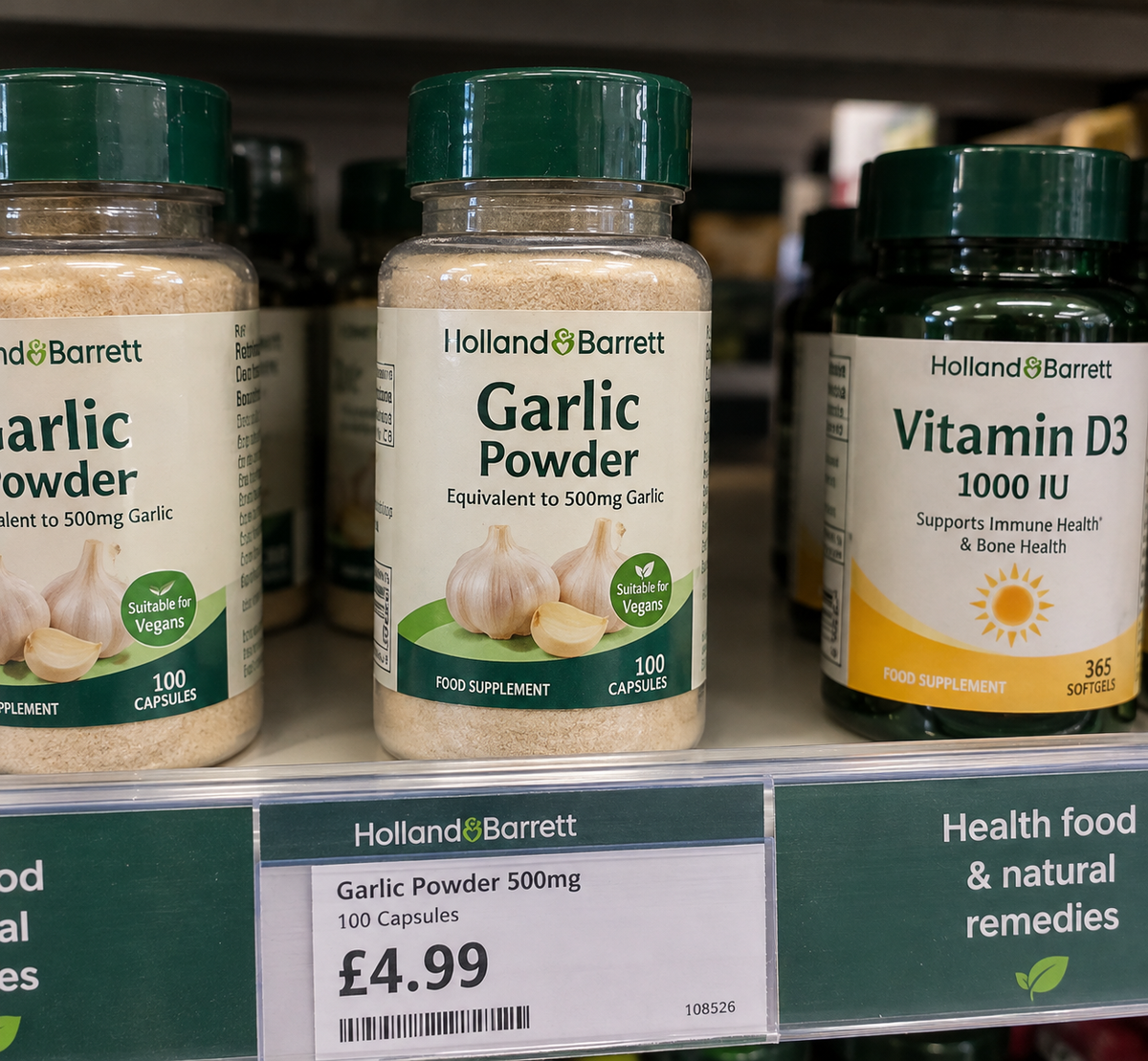
The first thing I tried was the obvious one. Garlic capsules from Holland & Barrett, the ones in every "natural cholesterol support" list on the internet. £7.99 for sixty capsules, two a day, job done.
Except it wasn't.
Three months in, I went back to the surgery for bloods. My total cholesterol hadn't moved. Not even slightly. My GP looked at the screen, looked at me, and said the words I'd been dreading: "I think we should talk about statins."
I went home and actually read the packet. "Garlic powder." That's it. Dried, crushed garlic shoved into a capsule. No ageing. No standardisation. Just garlic powder, the supplement equivalent of sprinkling garlic granules on your toast and hoping for the best.
Three months. £8. Nothing changed. And now my GP was pushing statins.
The Plant Sterol Drinks Everyone Buys (Benecol)
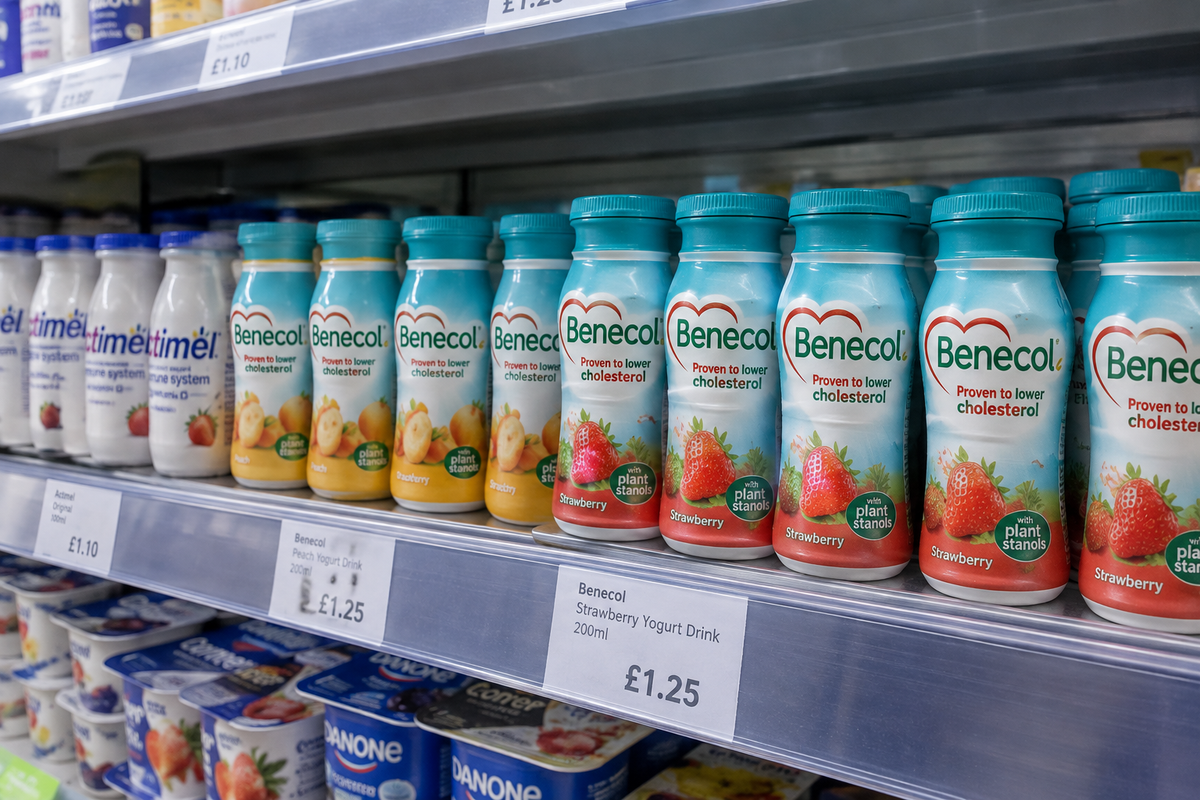
My GP's actual recommendation. Benecol. Those little yoghurt drinks in the chiller aisle that half the women at my book club were already downing every morning.
And I'll be honest: the first few weeks felt like progress. You're doing something. It's in the fridge. Your GP told you to take it. It feels official.
Then I looked at what plant sterols actually do. They block some cholesterol absorption in the gut. That's it. They don't touch the cholesterol your liver is already overproducing. They don't do anything about the fibrin build-up that traps cholesterol against your artery walls. It's like putting a plaster over one scratch while the rest of your arm is bleeding.
Six weeks in, my LDL had dropped by 0.2 mmol/L. My GP called that "modest." I called it six weeks of choking down yoghurt drinks that cost me £3.50 a day for almost nothing.
The Fish Oil My Sister Swears By
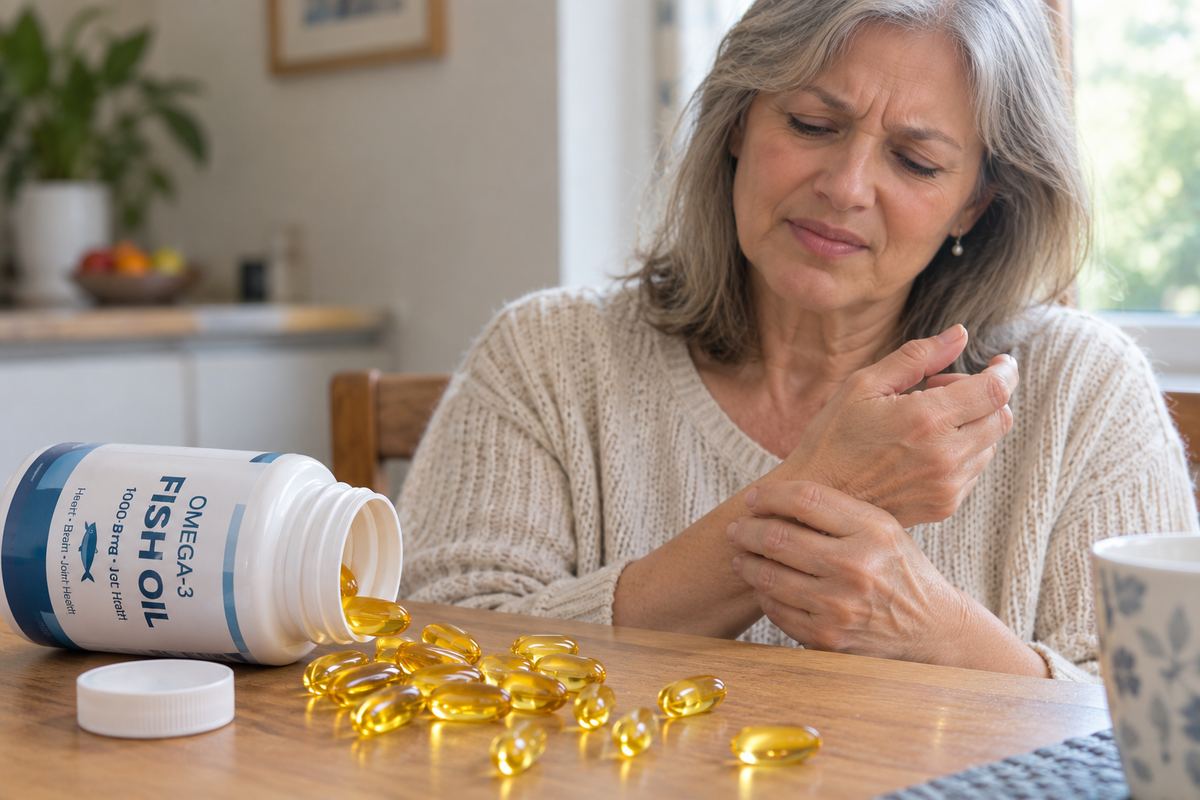
"Just take omega-3. Honestly, it sorted mine right out." My sister, who is 54, eats whatever she likes, and has somehow always had perfect bloods.
So I bought the expensive ones. Not the Tesco own-brand. The £28 high-strength capsules from Boots that promised "cardiovascular support" in big letters on the front.
And they're fine. For her. She isn't postmenopausal. Her liver isn't suddenly stripping LDL receptors because her oestrogen dropped off a cliff. A fish oil capsule can't fix a problem it was never designed to address.
Two months in, my numbers hadn't budged. I had fishy burps every morning and a lighter wallet. Popular doesn't mean right for you. It just means your sister got lucky.
The Red Yeast Rice That Ranked Dead Last
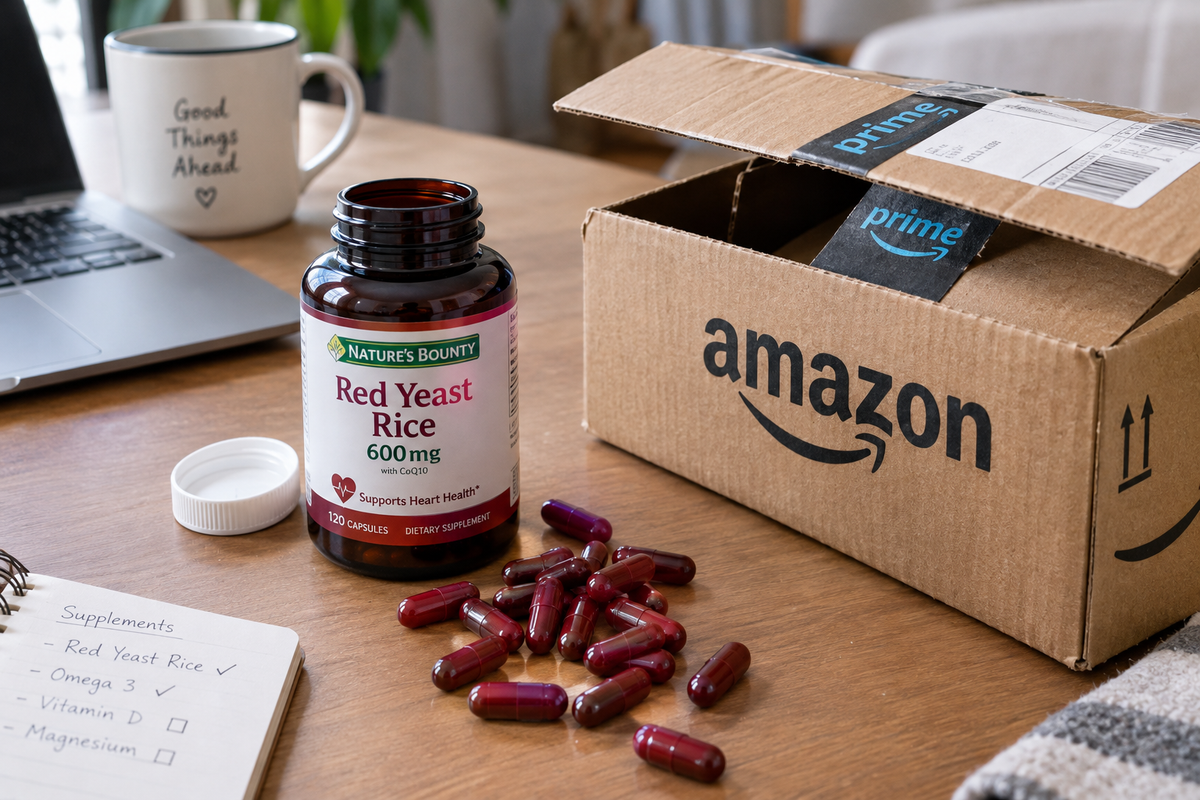
Red yeast rice. The one supplement with "statin-like compounds", which should have been a warning, not a selling point.
I found it on Amazon. Five-star reviews. "Nature's statin." £22 for a month's supply. I thought I'd found the loophole: the benefits of a statin without the prescription, without the side effects, without the quarterly blood tests.
Two weeks in, the muscle aches started. The same aches my mother complained about for years on atorvastatin. I looked it up. Monacolin K, the active compound in red yeast rice, is chemically identical to lovastatin. I wasn't avoiding a statin. I was taking an unregulated one.
I stopped immediately. And I felt like an idiot for not reading the research first.
The Statins My GP Finally Talked Me Into
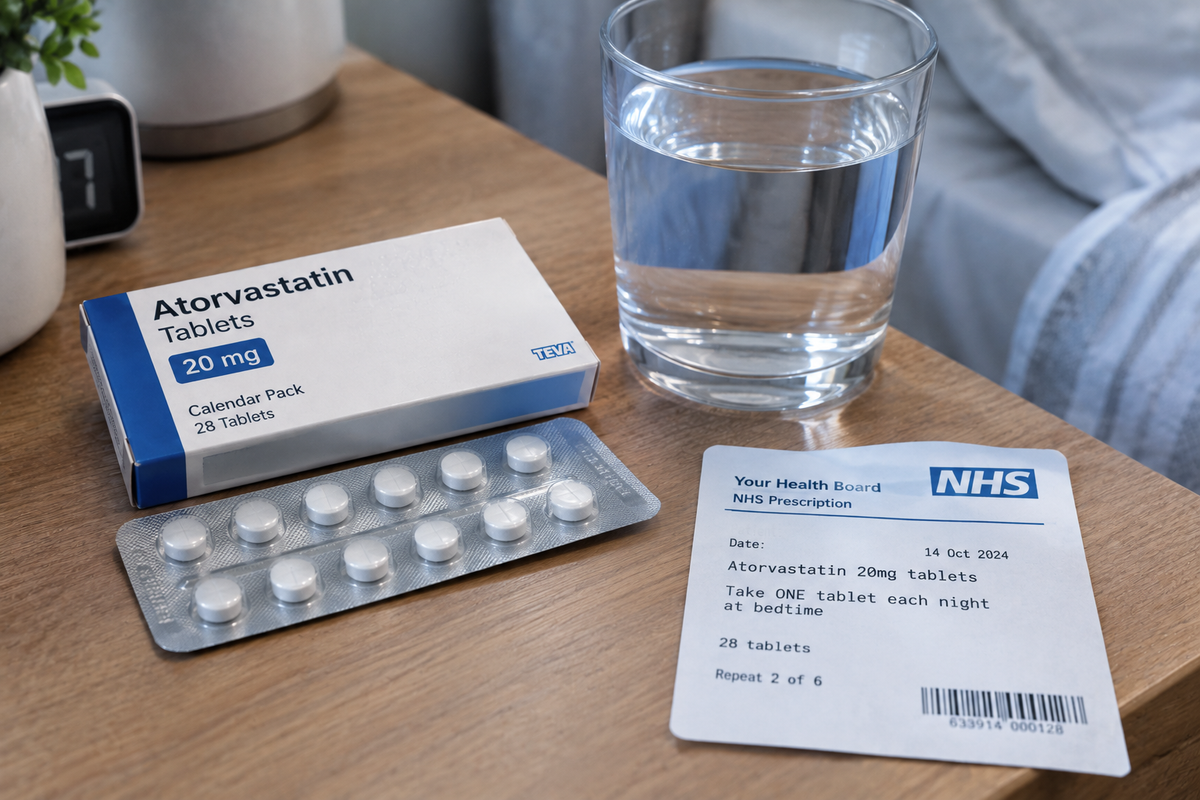
After everything else failed, I gave in. My GP had been circling statins for over a year, and I'd finally run out of reasons to say no. Atorvastatin. 20mg. One tablet before bed every night.
I'll give credit where it's due: my LDL dropped. Within eight weeks it came down by nearly 1.5 mmol/L. On paper, it was the best result I'd had. My GP was pleased. My husband was relieved.
Then the side effects started. First the muscle aches, a deep, persistent soreness that settled into my legs and wouldn't leave. Then the fatigue. My concentration went patchy. I started forgetting words mid-sentence, and I'm someone who does the crossword every morning. Later I learned statins also lower your body's CoQ10, the molecule your muscles use to make energy.
My GP said the aches were "not uncommon" and suggested trying a lower dose. I asked her the question that had been gnawing at me: "If I stop taking these, does the cholesterol come back?" She paused. And then she said yes.
That's when it clicked. Statins manage the number. They don't address what's happening underneath. This was my own experience, and I'd always say: speak to your GP before changing any prescribed medication.
The numbers dropped. The side effects didn't.
Then There Was the One Nobody Recommended
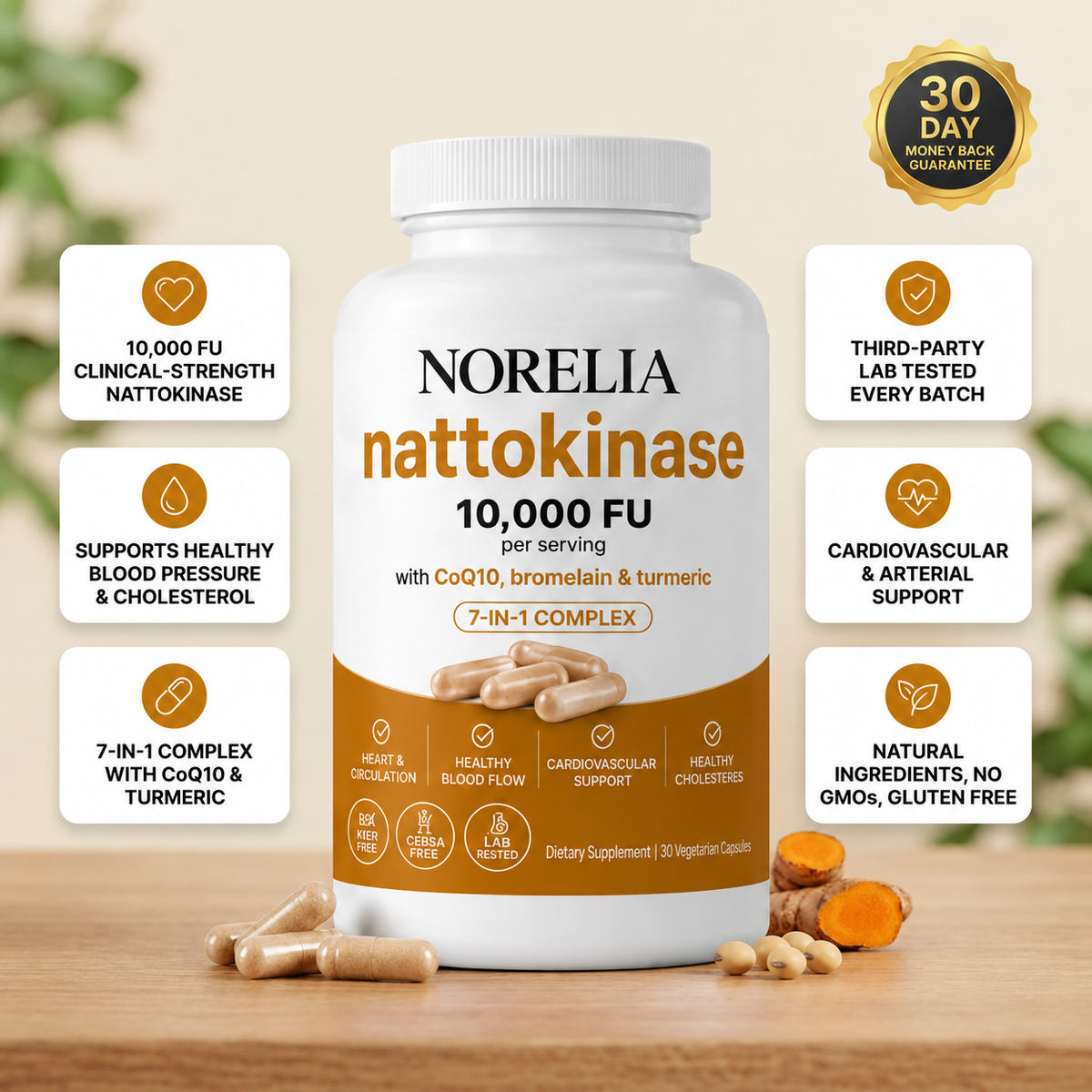
I almost didn't try Norelia. I'd never seen it in Holland & Barrett. Never spotted it in Boots. It had never shown up in any of those "top 10 cholesterol supplements" articles. A woman in a heart health forum mentioned it in passing, and I added it almost as an afterthought.
The first thing I noticed was the label. Not "2,000 FU." Not "high strength" with no number at all. It said nattokinase, 10,000 FU per capsule, in a 7-in-1 complex with CoQ10, aged garlic extract, turmeric and pine bark, with the enzyme activity printed right there on the bottle.
I didn't know what fibrin was. I looked it up. And that's when everything I thought I knew about cholesterol supplements fell apart.
Here's What None of the Other Supplements Addressed
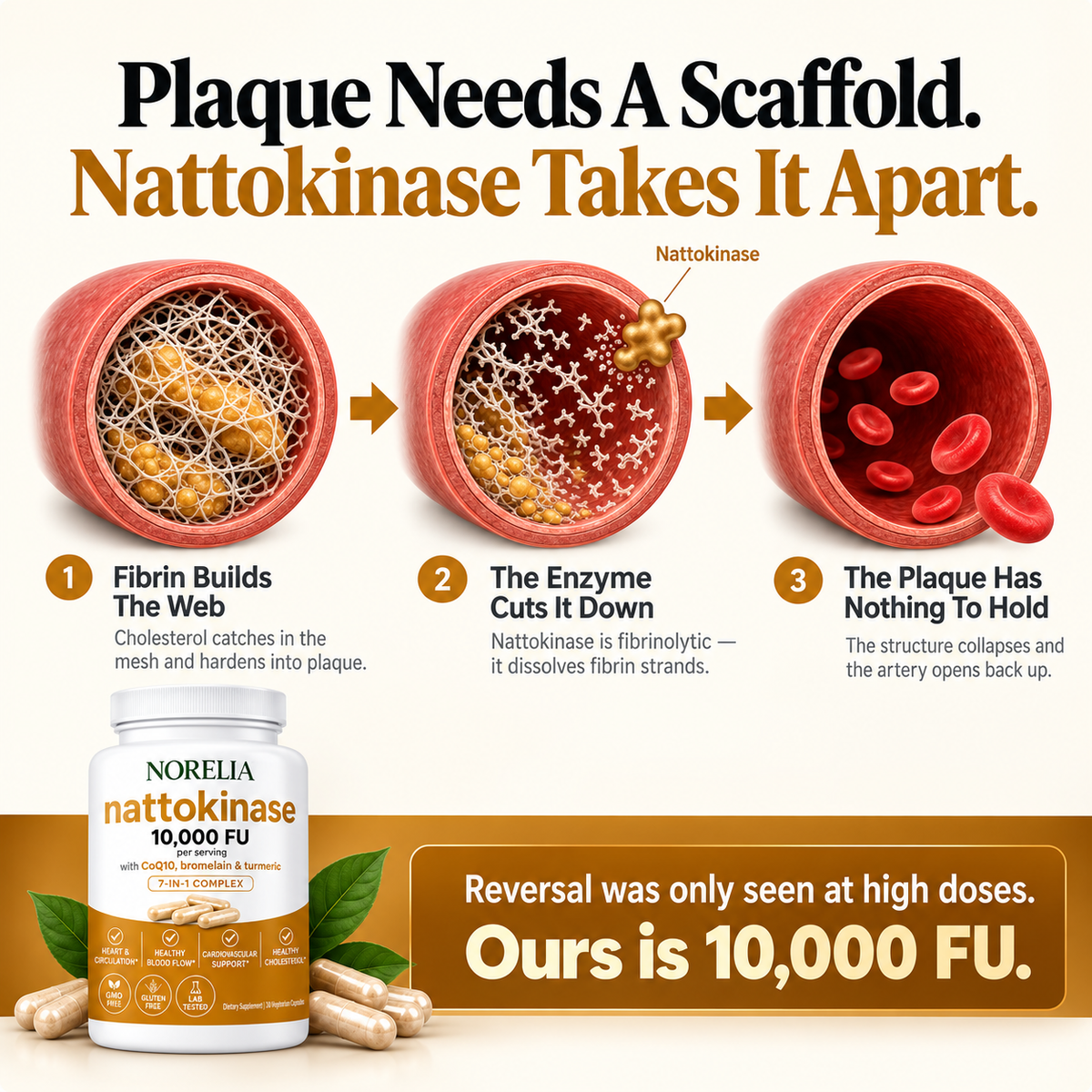
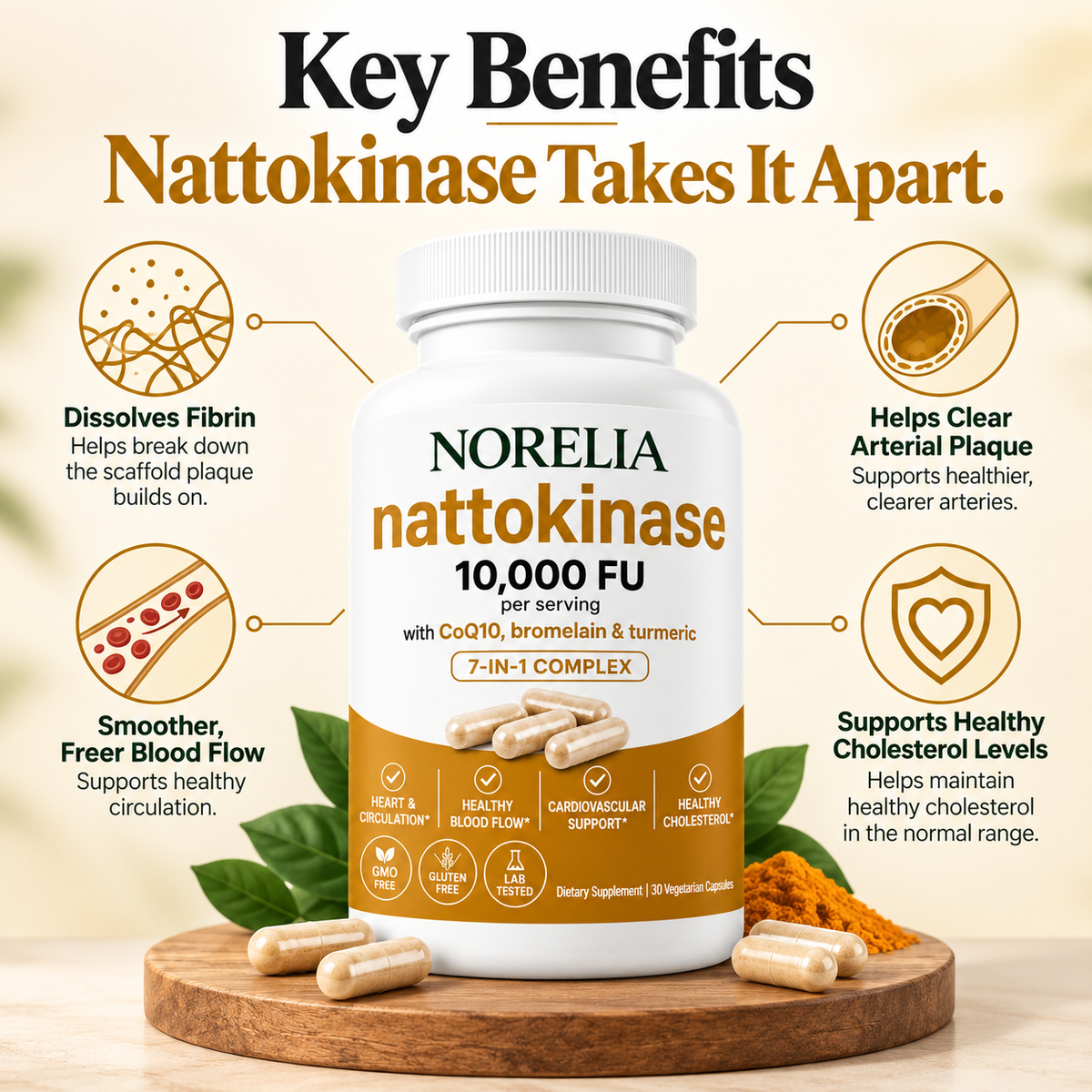
Your cholesterol isn't just "high." It's getting trapped. Your body builds fibrin, a sticky protein mesh, along your artery walls, and that mesh catches cholesterol, calcium and debris like a net. Your GP measures total cholesterol and LDL, but nobody mentions the scaffolding holding it all in place.
Nattokinase, an enzyme from fermented soybeans, is fibrinolytic: it helps break down fibrin. That's something none of the other supplements even attempted. Norelia pairs it with CoQ10, the energy molecule statins are known to deplete, plus aged garlic extract, turmeric, bromelain, pine bark and grape seed to support circulation and healthy blood vessels.
The high-street nattokinase I'd tried? Around 2,000 FU. The largest study I could find used 10,800 FU a day. Below the studied dose, you're mostly paying for the label. Norelia is 10,000 FU in one capsule.
And the garlic capsules from Holland & Barrett? Dried powder. Norelia uses aged garlic extract instead.
Same Year. Same Woman. Same Stubborn Cholesterol.
Here's where each one landed.
 ✕
 ✕
 ✕
 ✕
 ✕

- 10,000 FU nattokinase
- 7-in-1 complex with CoQ10
- One capsule a day
Dried powder, no ageing. Three months. Numbers didn't move.
Blocked a fraction of gut absorption. 0.2 mmol/L drop after six weeks.
Built for my sister's genetics, not my hormonal shift. Two months. Nothing but fishy burps.
Contains a statin compound. Muscle aches within two weeks. Stopped immediately.
LDL dropped on paper. Then the muscle aches, brain fog and fatigue. Stopped after four months and my numbers crept back up.
10,000 FU nattokinase in a 7-in-1 complex with CoQ10 and aged garlic extract. One capsule a day. The only one that addressed what was actually happening underneath the number. The only one I kept taking.
The ones that failed cost me over £200 combined. The one that worked costs less than a month of Benecol.
The Only One I Still Take
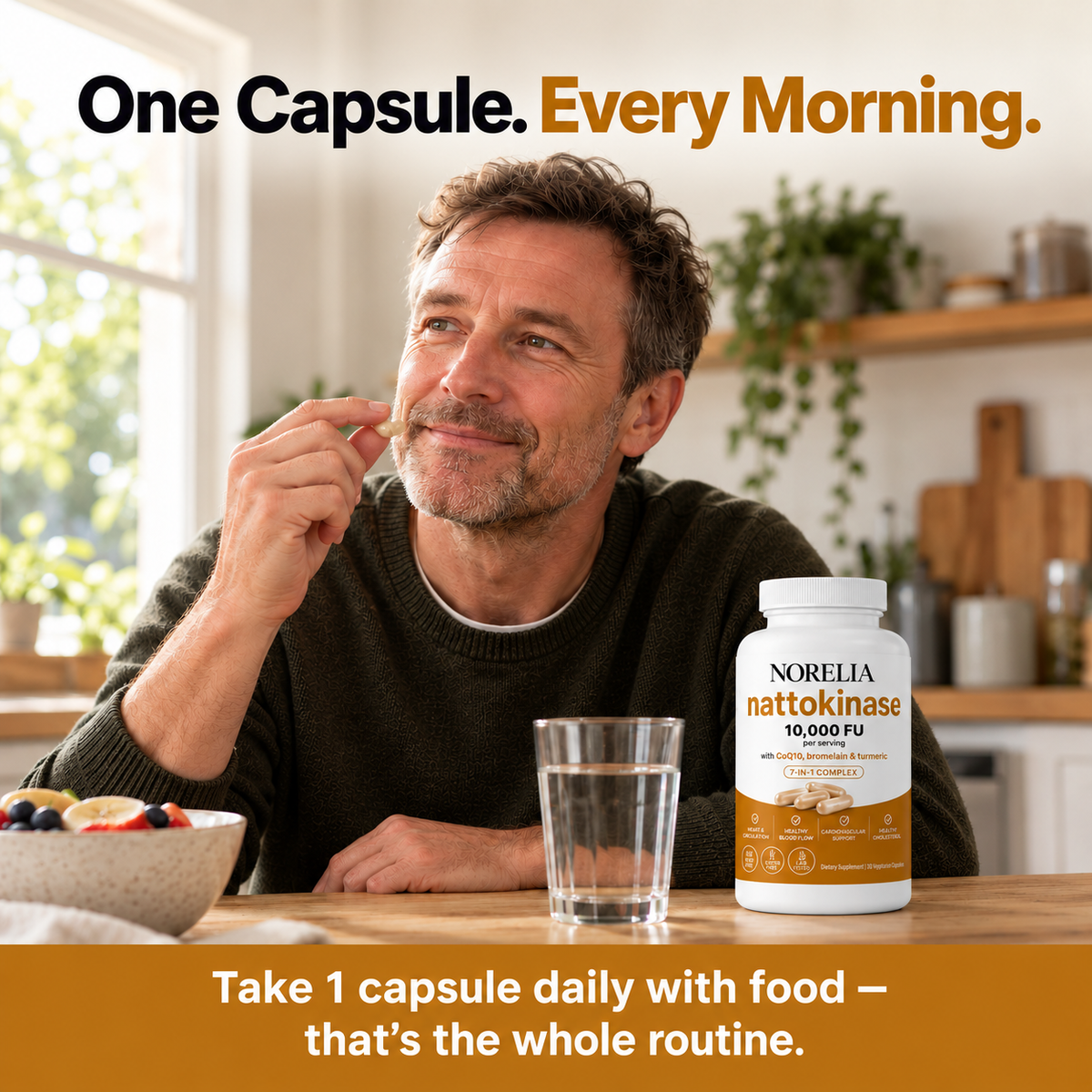
It's been four months since I finished testing everything. Last week I cleared out the medicine cupboard. The Holland & Barrett garlic went in the bin. The fish oil. The half-empty box of Benecol at the back of the fridge. All of it.
Norelia is on my kitchen counter, next to the kettle, where I take one capsule every morning with breakfast.
And here's the part that still catches me off guard: after spending over £200 on supplements that did nothing, the one that made the difference for me costs £24.95. Less than a month of those yoghurt drinks. Less than one box of the fancy fish oil.
My last blood test, and I'm not going to pretend I wasn't nervous sitting in that waiting room, was the first time my GP didn't mention statins.
But Will It Work for Me?
That was my exact worry. And it's the number one question women ask me about this.
Here's the honest answer: if your cholesterol has crept up since menopause, and you've tried the usual recommendations and nothing's really moved, there's a reason for that. Your oestrogen levels dropped, and with them, the LDL receptors on your liver that used to clear excess cholesterol from your blood. The supplements that worked for your sister, your friend, your colleague were never designed for what's happening inside your body right now.
Norelia isn't a miracle. It's clinical-strength nattokinase at 10,000 FU, in a 7-in-1 complex built around the dose the research actually used. One capsule a day. Nothing to measure, mix or remember twice.
And if you change your mind? Every order is covered by Norelia's 30-day money-back guarantee.
One more thing, because it matters at our age: the women I hear from aren't looking for a miracle. They're looking for something that doesn't come with the side effects their mother spent fifteen years complaining about. Something that actually addresses what's going on underneath, rather than just managing the number on a screen.
Reaching the End Means You're Serious About Getting Your Cholesterol Under Control.
Here's everything you need to decide.

54% Off For A Limited Time Only
I was sceptical too. But third-party lab testing, one capsule a day and a 30-day money-back guarantee made it an easy decision for me.
This is a sponsored advertorial based on one customer's personal experience. Individual results vary. Food supplements are not a substitute for a varied diet or for prescribed medication, and are not intended to diagnose, treat, cure or prevent any disease. Speak to your GP before changing any medication or if you have a medical condition.